
Transitioning into a career after your Humanities PhD – Or how to create an Alt-Ac Philosophical Company
“What are you going to do with your degree in philosophy?” Every philosophy student sooner or later hears this cliché question. And it is not unfamiliar in other fields from Humanities and fundamental sciences. The stakes are even higher after a PhD in said disciplines. Your slim chances at work appear narrowed down to the academic job market. But statistics are compelling: more than 75% of recent PhD holders do not find academic employment. Go figure.
This is the personal story of my transition from a PhD in academic philosophy to an Alt-Ac career as a self-employed philosophical counselor. Fortunately, as you know, academic skills are transferable, and so are philosophical skills. My story is essentially skills oriented, too. But the interesting part of the transition begins only after you have identified the skills that constitute your craftsmanship…
“The PhD lived happily ever after”
I did my PhD on Stoicism in its social and cultural context. About half way through my PhD project I realized I did not want to continue in academia. I struggled with the personal process of doing a PhD, for which I sought an external coach. I worked very hard to complete my PhD, but it depleted me more than having two children around that time. I could no longer see the meaning of my work and think as clearly and creatively as I used to. I had no idea what to do after my PhD. All I ever pictured in my post-PhD future was a happily-ever-after life as an academic. And so did almost everyone around me. Since then awareness about the reality of the academic job market has changed, fortunately.
Going Alt-Ac: why, when and how?
After obtaining my PhD I was determined to use my talents to do meaningful work that did not drain me. In my PhD work I was mainly involved in academic discussions with people who have been dead anywhere between 20 and almost 2,500 years. I felt lonely and my work felt meaningless. But I still loved philosophy — as I do today. I am fascinated with the way philosophy helps to elucidate complex problems by questioning assumptions and suspending judgment about “self-evident” views.
With more than 10 years training in academic philosophy, unsurprisingly the core of my craft is the ability to wonder and to ask questions from a fundamental position of not-knowing. My Alt-Ac path has enabled me to make a living of this craft in a way that is more energizing and satisfying, and that appeals to more of my talents than I ever imagined possible during my PhD.
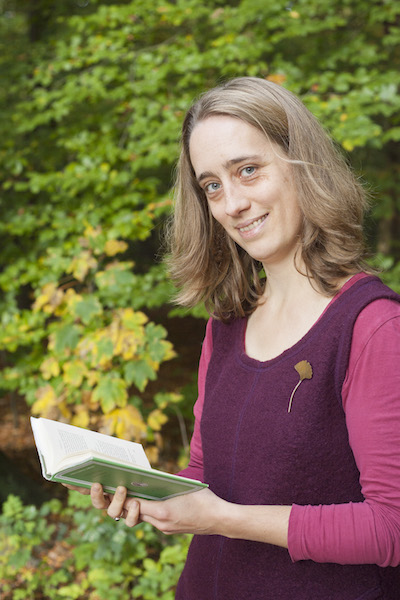
Even if I did not fancy a future as an academic philosopher myself, I do love the passion, integrity, and curiosity with which researchers strive for knowledge and excellence in the face of failure, criticism, uncertainty. But I also look behind the scenes, at the personal struggles. Working hard is the norm in the academic world. I see how long-term career uncertainty confines academics and makes them doubt their worth. How they make their life’s happiness dependent on the critical judgement of a supervisor, peer reviewer or grant committee. How the pressure to perform inadvertently disconnects them from the meaning of their work.
These personal tragedies hurt. Hence the plan to combine the two and become a philosophical life and career counselor for academics. Since starting my company I have helped hundreds of researchers to connect reason with their heart’s wisdom, to move forward harmoniously towards fulfilling their vision with enthusiasm and confidence in life and career.
But I am getting ahead of the story. When I defended my PhD thesis, this was not clear at all. I distinctly remember telling my former colleagues over drinks after my defense that I did not consider ever becoming self-employed. Within a year I had founded my own coaching and training company.
Why? Because during that year I had realized from conversations with fellow PhD candidates and from my temporary gig as a student advisor that I am able to let people feel safe to open up and have deep, helpful conversations. I decided to professionalize these skills by enrolling in a coaching and training program. There I learned that self-employment is a common and convenient working format for coaches and trainers.
How to become a philosophical entrepreneur
There I was, highly educated as an academic philosopher, with a solid professional training as a coach. But I hardly knew a thing about starting a company. I have since met many people who are a lot more savvy about running a business than me. At the time I was basically clueless about marketing and initially did not take any business or marketing course. I made almost every mistake I could as a start-up entrepreneur.
But looking back I realize that I did at least one essential thing correctly that made my enterprise viable: I sat down and defined really precisely what my niche was going to be. Whom was I going to help? And what exactly could I help them with? Some people doubted my plans to become a counselor for PhDs and postdocs, thinking my focus was too narrow. In hindsight, I can say it is not, not at all.
So this is my first piece of advice for you, if you consider starting your own business after your PhD. Focus is key. Figure out who already loves what you are doing. What are their problems? What keeps them up at night? What golden future are they dreaming about? What solution do you have to offer them?
Philosophy and money
The second issue about starting your own company as a philosopher and humanities scholar is money. Of course self-employment is financially risky. But this is not so different from the situation in academic employment. Likewise with respect to autonomy and flexibility.
The issue with money is that many philosophers, once they make enough to eat and live, are not very interested in something as ‘mundane’ as profit. Let’s be honest: most of us started our philosophical studies because we were in some shape or form drawn to valuing the Good, the Truth, or the Life of the Mind. We are not in it for the money or some other form of material gain. Indeed, during our philosophical training we get plenty examples of this mindset: a certain disdain for material goods is widespread throughout the history of philosophy. Not helpful if you want to make a living with your own company.
As a philosopher in business I am still learning about the power of money, the value of my expertise, and the need to be paid accordingly. For the sake of complete honesty, I will tell you about a mistake I made as an entrepreneur with one of my first clients. After being in business for just about a month a client heard my price and asked whether this was my job or a hobby, because it was so cheap. This was an occasion for applying another PhD and philosophy skill: to learn new stuff quickly.
If you are interested in being self-employed as a philosophy PhD, this is therefore my second piece of advice. Hone the entrepreneurial skills you already have. You are a fast learner, a creative thinker, self-starter with perseverance. You are used to positioning and presenting yourself as an expert. But take a critical look at your personal philosophy, your mindset regarding money and value. From there, allow yourself to be a novice. Go learn new stuff and expand your horizon.
Academic Renegade
So much for the ‘easy’ part of becoming an entrepreneur. There is also a more difficult part about starting your own company as an Alt-Ac philosopher that I want to warn you about. I encountered a major challenge as I started out with my independent counseling practice which had nothing to do with business strategy, niche finding, or money mindset. Once I had my website and all formalities and signboards in place, had helped my first paying clients, I went on to tell a lot of people in my academic and personal network about my company. This took courage. A lot.
I felt extremely vulnerable as I went out in the world still reinventing my new self. I felt like I was betraying the quality standards and rigor of academic philosophy. In fact, after 6 years I still feel like that sometimes. I no longer do academic philosophy, with its relative safety of neutrality or impartiality in the claims and arguments to hide behind, or extensive footnotes with references to back you up. I am personally involved. My own views on life and happiness are out in the open, for everyone to see including my former academic colleagues. Not complying with the standards of academic rigor and without the imaginary shield of ‘academic objectivity’. This is scary, but at the same time I find this realness of my work immensely satisfying.
Excel at doing meaningful work that you love
When I went ahead and started my own company I intuitively adopted a different working strategy from the one I had during my PhD. I later discovered that you could call this method working soft, as opposed to working hard. The Working Soft® method that I am meanwhile licensed to teach.
My heartfelt wish for you, dear reader, is that you enjoy fully living your potential as a scientist and a human being. Be it as an academic, an Alt-Ac professional, as an entrepreneur, inside or outside your scientific area, or whatever else. Discover your unique talents. Do meaningful work. Stay inspired and energized.
An earlier version of this article appeared previously on The Philosophers’ Cocoon.

‘Hoewel de meeste competenties en talenten van gepromoveerden die in de wetenschap cruciaal zijn, ook buiten de wetenschap erg worden gewaardeerd, wordt de vertaalslag van deze competenties door de universiteit niet altijd bewust gemaakt.’ Marian Thunnissen in https://www.sofokles.nl/nieuws/werken-in-of-buiten-de-wetenschap-welk-gras-is-groener/