
Where you do not need your supervisor’s approval for a successful PhD
Enrica struggles to complete her PhD. She started her project 4,5 years ago: she designed it herself, loved it, and was overjoyed when she received a grant that allowed her to study the topic she loved. Now, the project has become heavy. Often she just wants to chuck her computer out the window. She has tears in her eyes when she tells this, but she is also determined to finish.
She already knows that she does not want to continue in science after her PhD. She just secured a prestigious traineeship. But, well, the thesis still has to be finished. And finished well. So she can be proud of it. After multiple loads of critical feedback and rather impersonal guidance from her supervisors she longs for their compliment on her research. She admits: she mostly needs their personal consideration, their involvement. But she knows her supervisors… This is such a disappointment! Actually, she is angry about it, angry that they do not really see her. She just feels like a disposable.
Total surrender, or confident freedom?
I hear many stories like Enrica’s. PhD candidates put their success at the mercy of their supervisors. They long for a personal compliment about their research. But this way they make themselves more dependent on their supervisors than necessary. Of course, ultimately your supervisors have to sign your manuscript. Connect their name and fame to it. But then, what more?
Step one towards a completed PhD to be proud of
For a moment, Enrica looks like a rebellious teenager, but then she gets it. What she wanted to learn and do in her PhD project, she has already done and learned. She has participated in inspiring discussions about her discipline, she has attended international conferences, she has investigated her topic like a detective, she has organized awesome events with her colleagues. Her PhD project has enabled her to do all of this.
Yes, it is still important for her to complete her PhD in a good way. But what does this mean, exactly? Write a PhD thesis that she is proud of and that she is internationally recognized for? Defend her thesis brilliantly? Receive that degree, that title? For Enrica it boils down to her desire to complete this 4+ year project with a feeling of satisfaction, fulfillment. From this perspective, it is less important that her thesis is entirely her own text.
She applies some ancient Stoic wisdom in a contemporary and very practical way:
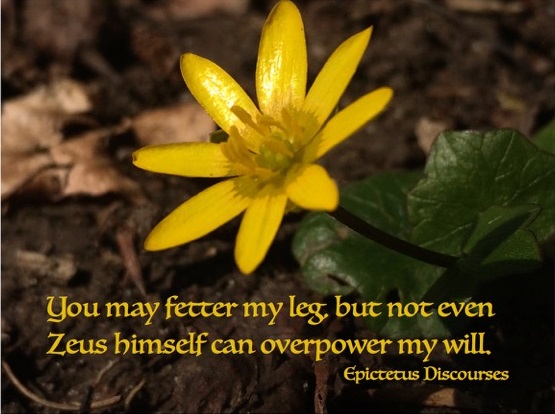
This is the art of living well: to know that some things are not up to you to determine. Others, Zeus, your supervisor, may restrict you in a certain way, ask you to rewrite your text according to their taste and criteria. Yet, you can remain independent. You can find freedom, happiness, fulfillment, by focussing on what you can determine, what you can influence. Epictetus calls this source of inner freedom your will. Many other Stoic philosophers speak of your soul, psyche, or reason.
Completely independent of approval
For Enrica Epictetus advice means to adjust her perspective. This creates space to accommodate her supervisor’s comments. Without surrendering herself to their wishes, ideas, demands. She can be proud of everything she accomplished and experienced during her PhD project. To own this, she is completely independent of any approval of her supervisors. Suddenly, it is no longer essential that every word, every sentence, every argument in her PhD thesis is hers. Her pride about her PhD, her satisfaction about the completion of this project are no longer outside her influence. She has now defined the success of her PhD. This gives her great strength and confidence.
What makes you proud and fulfilled when you complete your PhD? When is your PhD a success?

In elk creatieproces kan je drie stadia onderscheiden. Ideevorming, in de vorm zetten en leven met het resultaat. Elk stadium heeft een eigen aard, dynamiek en dus ook zijn eigen problemen. Om het proces zo goed mogelijk te laten verlopen is het van belang om zaken helder te blijven zien en daar “zindelijk” mee om te gaan (in feite helder denken en doen). Zo moet je bij “ideevorming” (iets komt in de wereld) je niet laten belemmeren door allerlei restricties die meestal bij de andere stadia horen. Laat dat “iets” in alle zuiverheid ontstaan. Pas nadat je besloten hebt, een keuze hebt gemaakt, breekt het volgende stadium aan. Dat van “in de vorm zetten” (je brengt iets tot leven) met alle fysieke vereisten van dien. Hier moet je overal rekening mee houden, regels volgen, “onderhandelen” en compromissen sluiten. Op een bepaald moment kan je dit stadium afsluiten het eindresultaat, waarna het creatieproces overgaat in het laatste stadium “leven met het resultaat”. De wil heeft vorm gekregen en is daarna een eigen leven gaan leiden….
Mooi samengevat, King! In mijn ervaring doen de grootste moeilijkheden zich voor in het grensgebied tussen de verschillende stadia. Het zijn nu eenmaal geen helder onderscheiden fases, met scherpe grenzen. Dat grijze gebied zorgt per definitie voor een troebele periode, waarin helder denken niet vanzelfsprekend mogelijk is.